Section
The Market
Demand, trends, and where the industry is going. 8 pieces.
Start Here
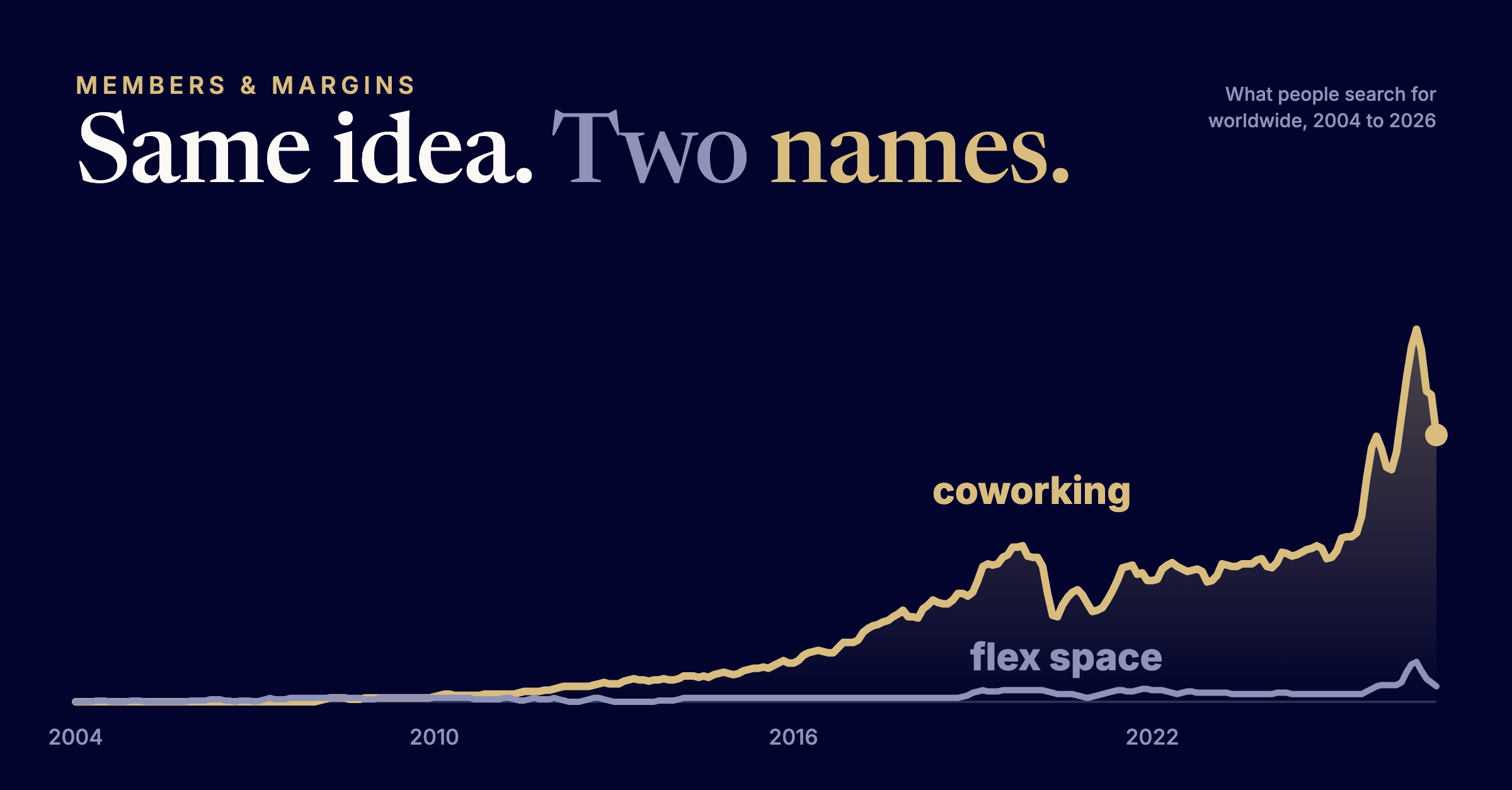
Flex vs Coworking: Why One Industry Has Two Names
Coworking was named by the people who built it, flex by the people who count the space. A dated history of both words, what each one measures, and why the industry still argues about which to use.
Read the article →Market Demand
The 30% That Never Was: How Flex’s Most Famous Number Drifted
The claim that 30% of office space will be flexible by 2030 is the most quoted number in coworking. It began as a measure of corporate portfolio preference, and over ten years of retelling it became a forecast for the whole market. Here is each step, and why flex is still only about 2% of office space.
Enterprise Demand
Corporate Coworking in the U.S.: How Enterprise Demand Is Changing the Market
Enterprise companies now account for over 30% of U.S. coworking revenue. Analyzing how Fortune 500 adoption, private office demand, and multi-city access programs are permanently restructuring the flex workspace market.
Market Trends
Europe’s Coworking Scene in 2025: Growth, Enterprise Demand, and Premium Trends
What Europe’s 2025 coworking growth, enterprise demand, management agreements, and premium flex workspace trends signal for operators, landlords, and investors.
Industry Outlook
Coworking Occupancy Benchmarks and 2026 Flex Trends
Why revenue per desk is replacing occupancy as the metric that matters in 2026, and what the shift means for operators and landlords.
Market Trends
2025 Coworking Trends: Management Agreements, Niche Markets, and Service Ecosystems
Analyzing the commercial real estate shift toward asset-light management agreements, hyper-specialized niche community spaces, and hospitality-first service ecosystems in 2025.
Market Trends
WeWork’s Bankruptcy: A Historical Paradox in Coworking
This morning, a coworking client sent me a Reuters article about the impending bankruptcy of WeWork. As someone who has been in the coworking industry since 2008, two years prior to WeWork, and whose businesses are tied to coworking and workplace culture, I feel compelled to comment on this situation.
Urban Economics
How Coworking is Redefining the Urban Landscape
How coworking reshapes the neighborhoods it lands in: local economic development, the way architects design for shared use, and the startup and talent scenes that form around it.