Mixed-Use
Why Flex Office Is Becoming the Strategic Heart of Mixed-Use Developments
Mixed-use projects need daily activity, revenue diversity, stronger tenant experience, and reasons for people to return throughout the week. A well-designed flex office layer can provide all four.
In this article
- 1. Flex office creates daily foot traffic that retail cannot reliably generate
- 2. Flex strengthens the residential component
- 3. Flex adds revenue diversity across the development
- 4. Flex bridges traditional office and modern workplace demand
- 5. Flex enhances the experience spine
- 6. The risk is treating flex like an amenity instead of a business
Strategic Context. This page expands the article preview into a practical owner and developer framework, not a generic trend piece.
What to do next. Use the logic below to decide whether flex belongs in the project pro forma, then validate the market with a feasibility scan before design or lease commitments.
1. Flex office creates daily foot traffic that retail cannot reliably generate
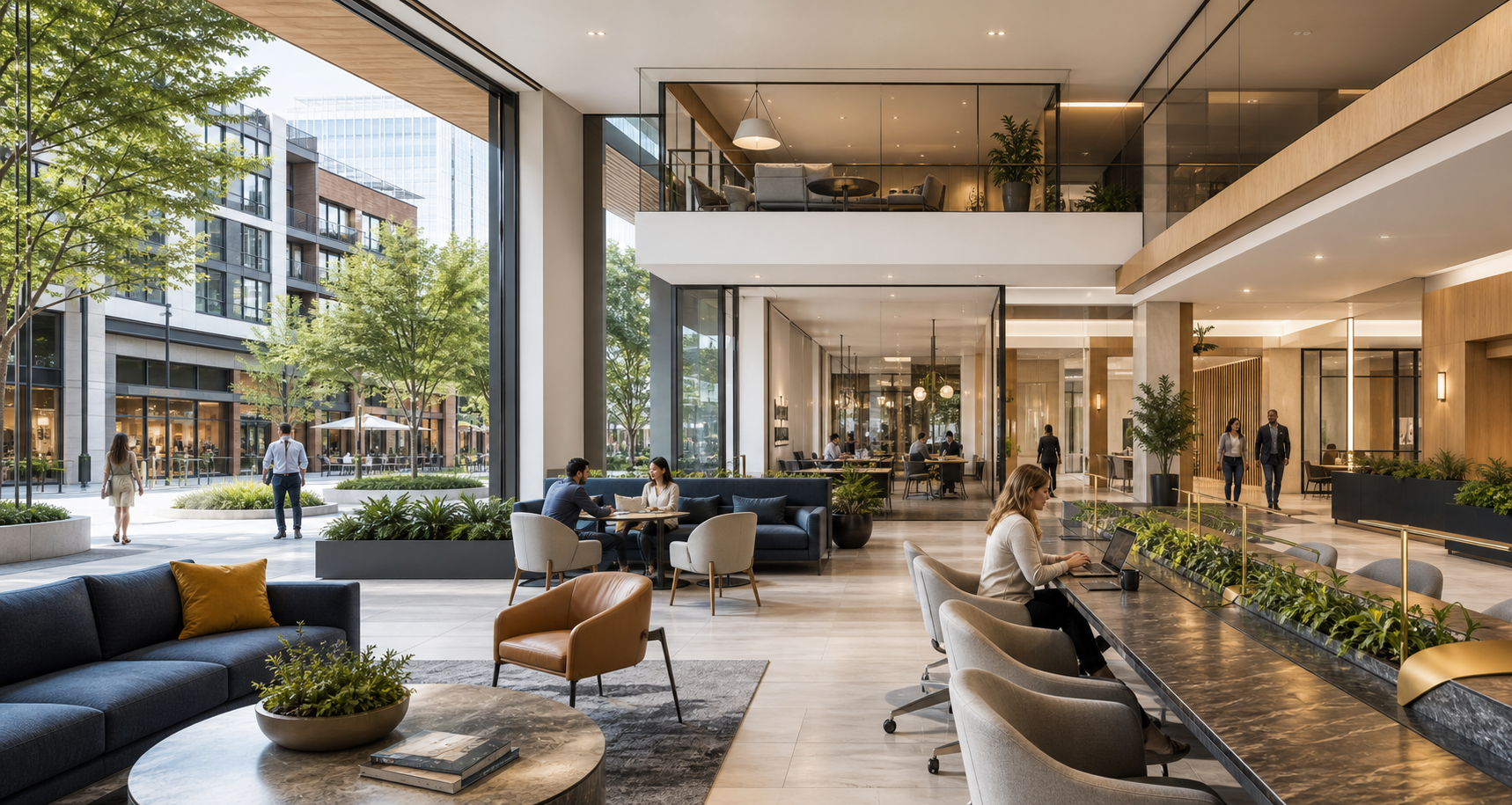
Retail activity is often concentrated around meals, weekends, events, and discretionary shopping. Flex office creates recurring weekday use. Members arrive in the morning, buy coffee, host meetings, use restaurants, visit service retailers, and keep the property active during the hours when mixed-use environments often feel underutilized.
For developers, that matters because foot traffic is not just a retail metric. It affects leasing energy, safety, tenant perception, and the day-to-day feel of the asset.
2. Flex strengthens the residential component
Residents increasingly want professional workspace near home. A lobby lounge is not enough for video calls, client meetings, focused work, or small team collaboration. A flex office center gives residents a more complete hybrid work solution without forcing them to leave the development.
In lifestyle and luxury mixed-use projects, this can support residential leasing velocity and retention. The flex layer becomes part of the value proposition for the entire community.
3. Flex adds revenue diversity across the development
A mixed-use asset is exposed to multiple market cycles at once. Retail demand, residential absorption, and office leasing can all move differently. Flex office adds a revenue layer that can include private offices, team suites, meeting rooms, day passes, event revenue, virtual mail, and corporate access programs.
That revenue diversity can improve the overall risk profile of the development when the model is properly designed and actively managed.
4. Flex bridges traditional office and modern workplace demand
Traditional office leasing has not disappeared, but the product has changed. Tenants want shorter commitments, expansion options, shared amenities, and lower friction. A flex office center can serve as both a tenant feeder system and a flexible extension of existing tenants.
The strongest mixed-use office strategy is no longer one product. It is a continuum:
5. Flex enhances the experience spine
The best mixed-use developments are organized around an experience spine: the connected pattern of spaces, services, amenities, and daily routines that make the property feel alive. Flex office strengthens that spine by adding professional purpose, meeting activity, daytime population, and a reason to return frequently.
Residential creates stability. Retail creates variety. Hospitality creates charm. Flex office creates weekday rhythm.
6. The risk is treating flex like an amenity instead of a business
The mistake is assuming coworking can be added casually. Flex office requires market analysis, space allocation, revenue modeling, technology, staffing, sales systems, and operating accountability. A beautiful room with desks is not a strategy.
Before adding flex to a mixed-use development, owners should answer:
- What products will the market actually pay for?
- How many private offices, desks, and meeting rooms are supportable?
- Will this be owner-operated, partner-operated, or leased to an operator?
- How will the flex layer support retail, residential, and office leasing?
- What is the expected ramp, margin profile, and operating burden?
Frequently asked questions
Why does flex office matter in mixed-use development?
It creates daily weekday traffic, supports residential hybrid work needs, strengthens office leasing, and adds diversified revenue.
Is coworking a retail amenity or an office use?
It is best understood as an operating layer. It has office economics, hospitality expectations, retail-like customer acquisition, and amenity value for the larger property.
How should an owner evaluate the opportunity?
Start with a feasibility model that tests local demand, pricing, layout efficiency, revenue mix, staffing, and operating structure.
Members & Margins
The people and the business of the coworking model.
Ideas, stories and research for anyone who wants to understand both the members in the room and the margins that keep it open. Free.