Brokers
The Longer a Floor Sits, the More It Costs
Every listing broker has a floor that sat too long. What it costs the owner each month it sits, why flex never made the list for it, and what to bring to the next ownership call.

In this article
Every listing broker has a floor like this.
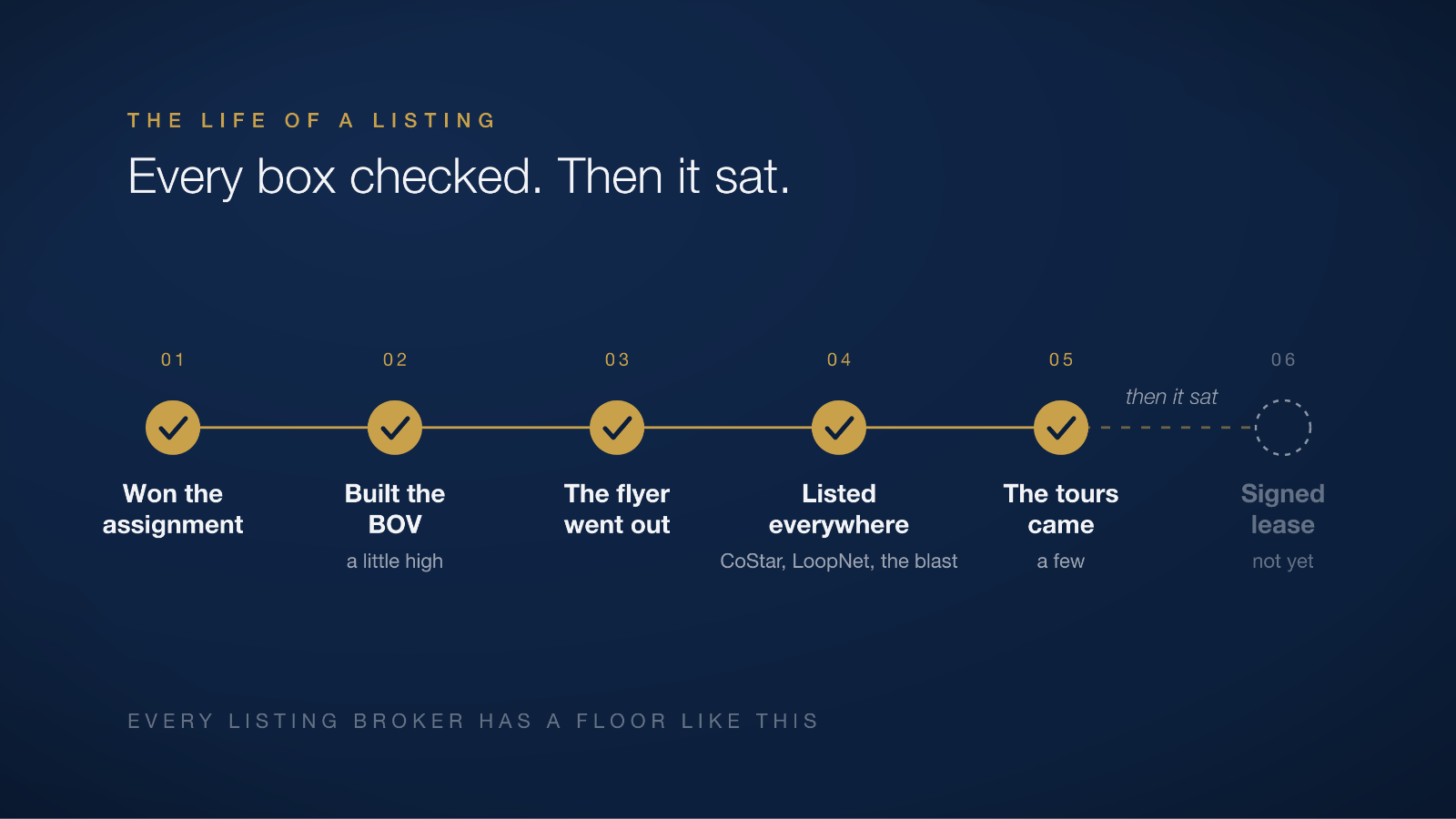
You won the assignment. You walked the owner through the comps and built the BOV, maybe a little higher than you liked, because three other firms were pitching too. The flyer went out. CoStar, LoopNet, the blast to every tenant rep you know. The tours came. A few.
Then it sat.
Now the ownership call is on the calendar again, and the tour report hasn’t changed. The owner asks the same question in a slightly different tone. “What are we hearing?” You give the tour count. You walk the lease comps. You suggest a rent adjustment, more TI, a few months free, and you can feel the owner deciding whether that’s advice or an excuse.
Here’s the part nobody says out loud. You’re being judged on an outcome you don’t fully control. The owner sets the asking rent. The owner decides whether to spend on the space. You’re the one who has to show up with something new.
And somewhere in the owner’s mind, the listing agreement has an end date.
It’s an inventory problem
Think of it like a dealer’s lot. Most inventory moves. Some doesn’t, and the longer it sits, the harder it gets.
Except you don’t own the lot. The owner does. You can’t drop the price yourself, and you can’t put money into the car. You can only bring the owner a better reason to.
And often the owner can’t simply cut the price either. A lower rent sets a new comp for the building and pulls its value down with it. Sometimes the lender has a say too.
The empty space isn’t spread evenly, either. More than 60% of US office vacancy sits in about 10% of buildings. If you work second-generation floors, odd suites, buildings with a little age on them, you’re not imagining it. You’re holding the hard inventory.
And the playbook is the same everywhere. Cut the rent. Raise the TI. Add free rent. Build a spec suite. Bump the co-broke. Sometimes it works. Sometimes the owner won’t move on any of it, and the floor goes dark for another year.
What sitting costs
An empty floor is not a pause. The taxes, insurance and utilities keep coming. The loan does not stop because the floor is dark. Every month without a tenant is rent the owner never gets back. And the deal that finally lands often has to carry more free rent and more TI to get done.
All of that lands on the owner’s books. The broker feels it on every call, because the longer the floor sits, the more each new idea has to be worth. What empty office floors actually cost every month puts numbers on it.
Why flex never made the list
It was never the product. It was the paycheck.
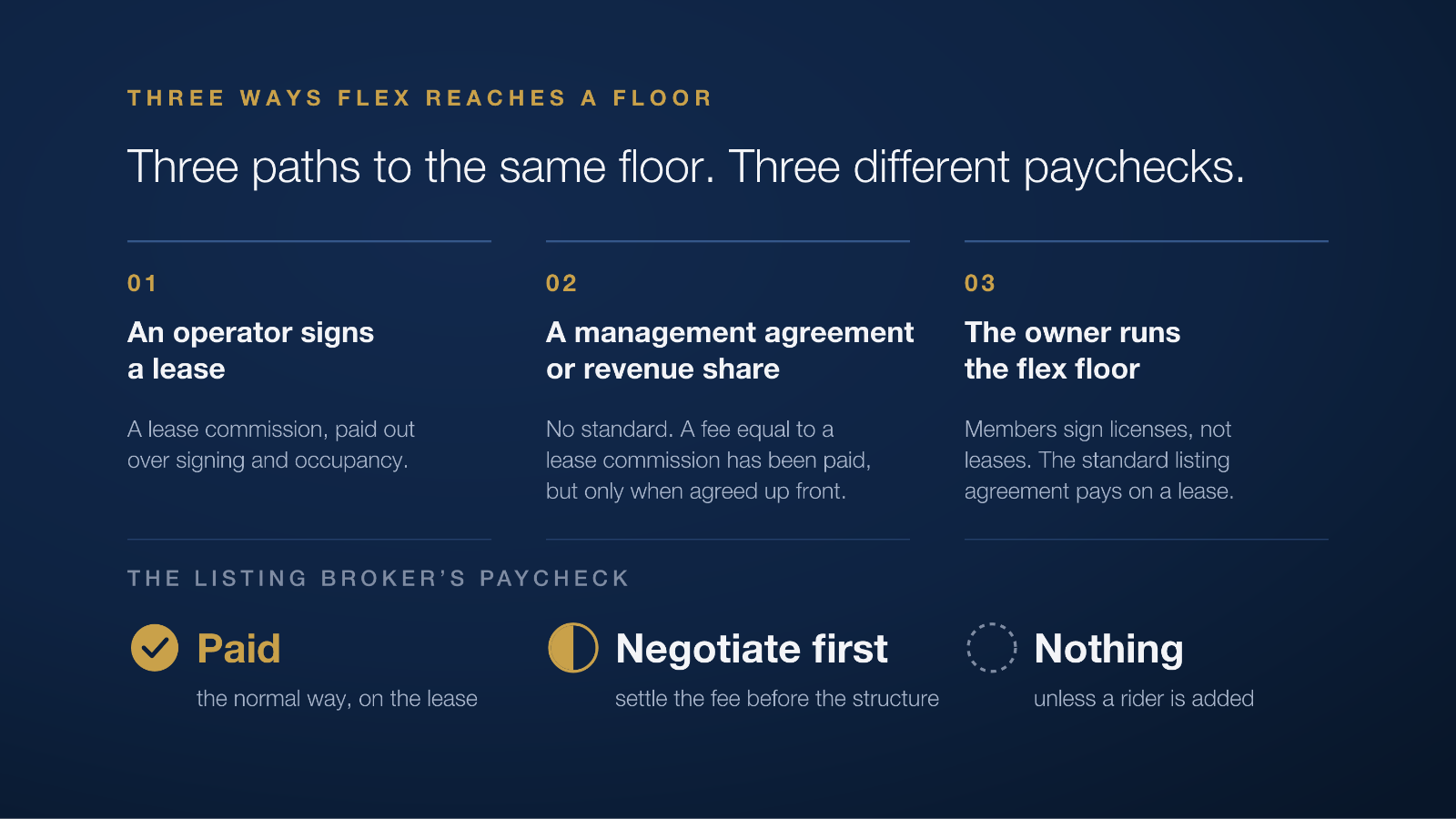
You work on contingency, and the biggest check is a long lease, paid out over signing and occupancy. Even then, the work and the check don’t always line up. You can carry the marketing for a year and watch the tenant rep walk away with the bigger share. Flex has meant smaller money still, and an unfamiliar document.
A membership pays differently than a lease. A management agreement may not pay in any way you recognize. No guaranteed rent, no framework, and no clean answer to the only question that matters on a deal: how do I get paid?
So most brokers left it off the list. That was rational. The cost was quiet: the owner often never heard the option at all.
What’s changed
Owners are asking. When a brokerage pitches for a building now, the owner increasingly wants to hear the flex strategy. Not as a footnote, as part of the pitch. Walk in without one and you’re carrying half an answer.
The referral side has a clean rate. Most large operators publish it, around 10% of the first year’s membership, some with a renewal bonus, and it’s paid on the full membership, not base rent alone.
Flex has become a landing pad. A team takes a suite because it isn’t ready to commit, grows, then takes space in the same building. The short deal is often the first chapter of the long one.
Where you feel exposed
Per square foot is the native language of this business, and it lies about flex. Put a coworking membership next to a traditional lease per foot and the gap looks absurd, because the flex price carries the common area, the furniture, the internet and the staff. Quote that comparison to an owner without unpacking it and you sound out of your depth.
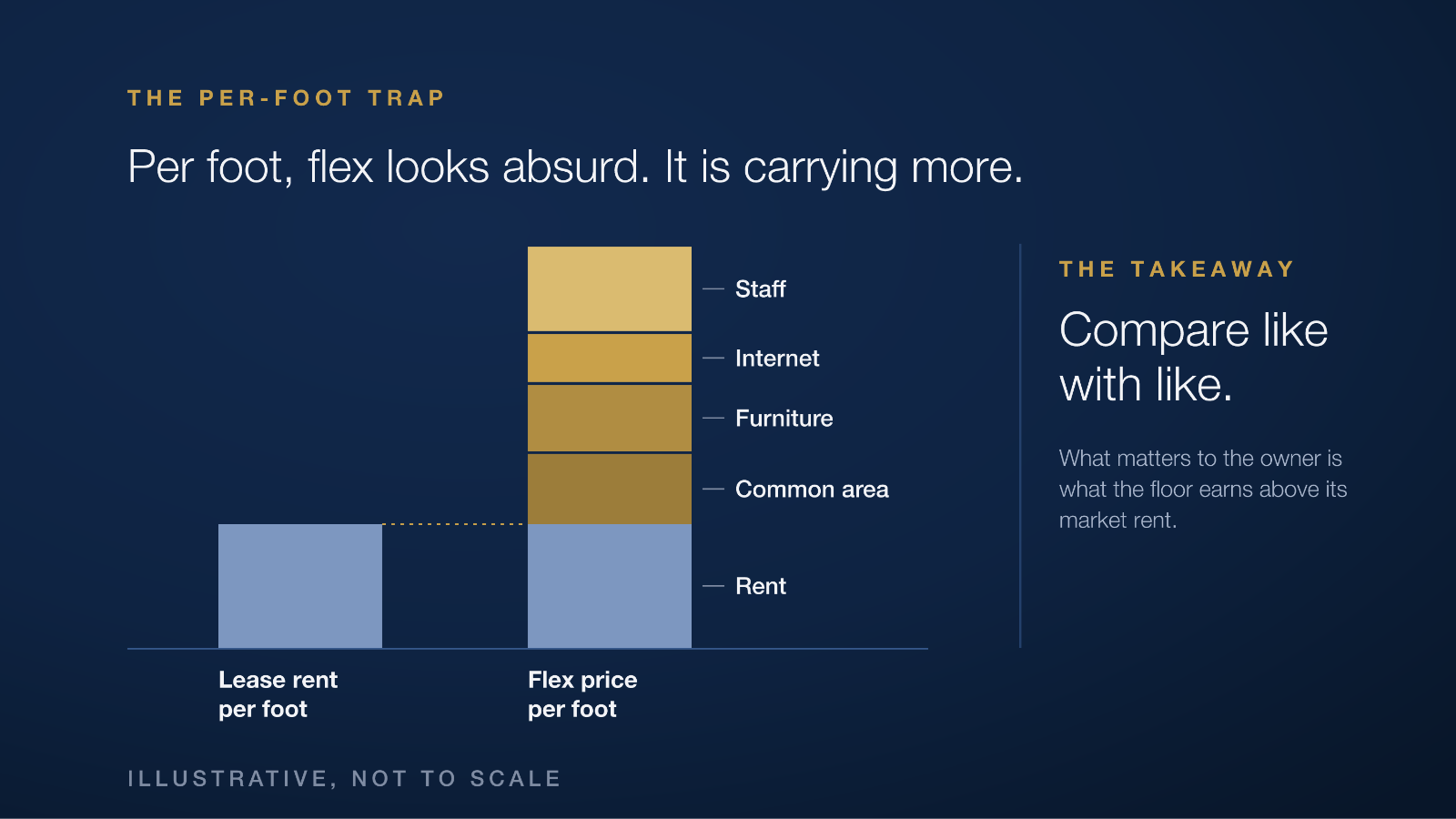
The honest comparison is simpler. A sound flex pro forma already pays the building’s market rent as a cost. What matters to the owner is what the floor earns above that rent, and early on that can be a loss. Lead with that and there is nothing for the owner’s analyst to cut.
The reframe
The question isn’t whether flex pays as well as a ten-year lease. Usually it doesn’t.
The question is what that floor pays you right now. If it hasn’t leased, the answer is zero.

The broker who walks into the next ownership call with a priced flex plan isn’t giving up the lease. They’re the one who brought a second answer to a floor that only had one. The deal can still end as a lease. It can be a franchise tenant, who signs a lease like anyone else. It can be a management agreement, and that’s a conversation you’re now inside of instead of outside of.
One practical thing, if it goes that way: settle how you’re paid before the owner picks a structure that isn’t a lease. Listing agreements are more negotiable than the standard fee story suggests, and it’s much easier to agree before the owner decides than after. How listing brokers get paid on flex walks through the paperwork, and the free commission rider that fixes it.
A second answer, priced
A test fit tells you what fits. A Flex Revenue Test Fit tells you what it earns. Upload the floor plan, and every private office comes back priced on the property’s own market, with the rent roll beside it, in a PDF with your name on the cover.
It earns its keep in two places. On a new pitch, it’s your flex strategy, priced, before the owner asks. On a floor that’s been sitting, it’s what you bring to the next ownership call when the tour report hasn’t changed.
Take the one-pager
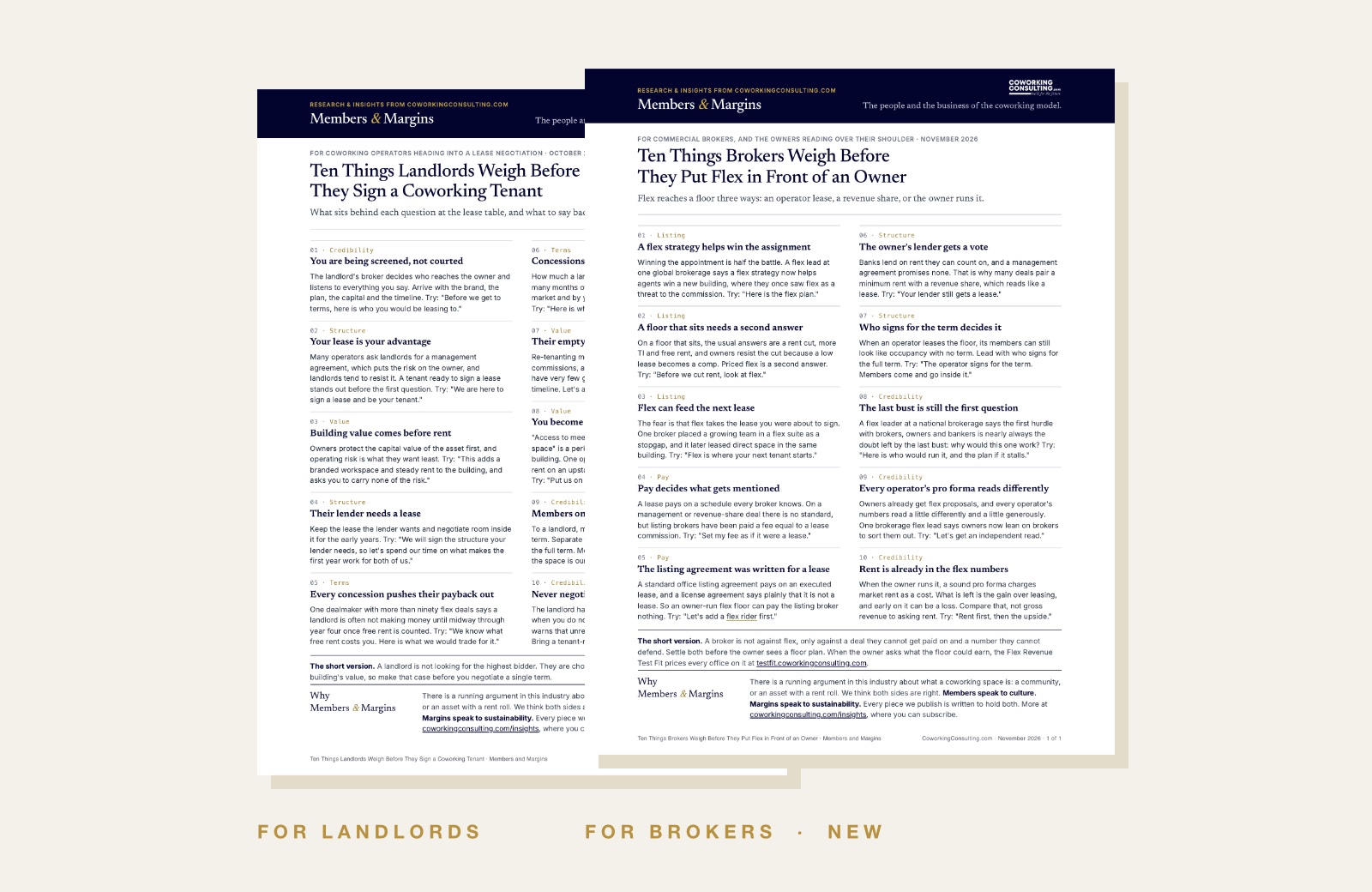
Ten Things Brokers Weigh Before They Put Flex in Front of an Owner puts all of this on one page: the three ways flex reaches a floor, how each one pays the listing broker, and a line to try with the owner for each hesitation. It’s free, by email, from the Downloads.

Frequently asked questions
Why do listing brokers rarely recommend flex to building owners?
Mostly because of how they are paid. A listing broker works on contingency and earns the most on a long lease. A flex membership or management agreement pays differently, often with no standard the broker recognizes, so the option tends to be left off the list.
Do owners want a flex strategy from their broker?
Increasingly, yes. When brokerages pitch to be appointed on a building, owners now often ask to hear the flex strategy as part of the pitch.
How does a listing broker get paid if the owner chooses flex?
It depends on the path. If an operator or franchisee signs a lease, the broker is paid the normal way. On a management agreement or an owner-run floor there is no standard, so the broker should agree how they are paid before the owner picks a structure that isn't a lease.
Members & Margins
The people and the business of the coworking model.
Ideas, stories and research for anyone who wants to understand both the members in the room and the margins that keep it open. Free.